John
John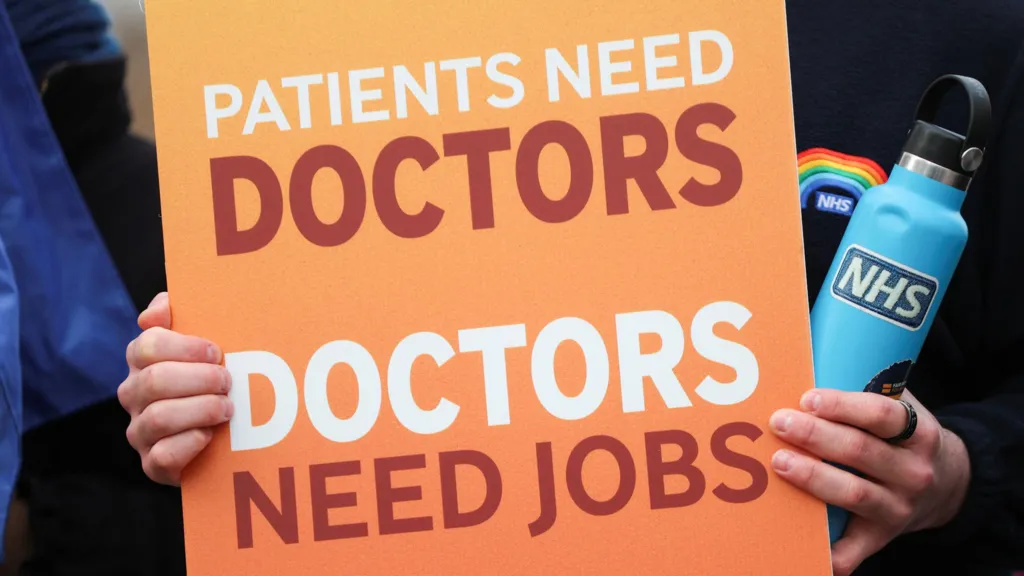
by New Worker correspondent
As the season of colds and flu approaches it is sensible to turn attention to the state of the NHS. Doctors in English hospitals took part in strike action last week to secure the reversal of more than a decade of falling real-term pay despite Heath Secretary Wes Streeting vigorously denouncing them for harming patients. At the same time it was announced that their Scottish equivalents are balloting for similar action.
Perhaps symbolic of the state of the NHS is that a £1 billion funding package announced by Streeting was denounced by Unison head of health Helga Pile. This was not sour grapes about it being too small but was because the package was to be used for redundancies, rather than anything constructive. She said: “His process has been a shambles and should never have taken so long. Demoralised staff have had months of uncertainty, with the threat of job losses hanging over them. Large-scale redundancies like these should never be callously dismissed as cuts to ‘bureaucracy’. In a few short months, the NHS will lose thousands of staff whose skills and experience will continue to be needed.”
On Monday, days after Unison’s complaint, another major union, the Royal College of Nursing (RCN) warned that hospitals and care homes are so short-staffed that nursing staff are working while sick and found it necessary to call for “urgent investment to grow the workforce as nursing staff’s stress levels hit an eight-year high”.
The RCN advice lines are being bombarded calls from nurses complaining of nightmares, panic attacks and exhaustion due to unsafe staffing levels. Some report that they are unable to safely take toilet or lunch breaks or even annual leave and are suffering exhaustion and burnout.
This is at a time when there are currently more than 29,000 registered nursing vacancies across the UK in the NHS alone.
A forthcoming survey of 20,000 UK nursing staff found that two-thirds worked when they should have been on sick leave, dramatically up from fewer than half in 2017. In the same period stress levels have risen to 65.1 per cent. Another bleak figure is that seven in 10 work in excess of contracted hours at least once a week, more than half doing so unpaid.
It is not just nursing that is short staffed. Particular problem areas are midwives, GPs, hospital doctors and mental health workers. Low pay doesn’t help.
Working conditions in the NHS also leave something to be desired. The virtual ending of on-site housing for young doctors and nurses makes the working day more tiresome. The privatisation of hospital catering has made it increasingly difficult to get decent food on site.
The lack of permanent staff has however, been good for employment agencies who supply temporary staff at far greater expense. In April the Health Service Journal revealed that NHS England figures will spend about £8.3 billion on temporary staffing in 2024/25, slightly down on 2023/24’s £10 billion, but well above the pre-pandemic £5.8 billion for 2018/19.
The 2023 Workforce plan announced by the Tories in 2023 hoped to see another 300,000 extra doctors, nurses and other health professionals by 2037.
This is clearly not going to happen; it depended too much on reducing training periods, without much thought about who was to train increased numbers and largely ignored the question of pay.
The Hospital Consultants and Specialists Association pointed out that: “Training new doctors will be to no avail if they don’t stay in the workforce, so the focus on retention is important – but doctors need to be valued fairly for their work and expertise or they will leave for better-paid jobs elsewhere. This plan is set up to fail if doctors’ pay continues to be eroded, the pay review process continues to be interfered with and pay disparities across the public health system persist.”
Recently some NHS trusts have been giving staff hardship grants, low-cost meals and money to buy their children’s school uniforms to help them cope with the deepening cost-of-living crisis.
Others have set up food banks, are subsidising public transport fares and advising hard-up frontline personnel how to access supermarket vouchers to help feed their families. A damning indictment of NHS pay.
One bright spot however, is the victory secured by more than 330 workers at the St Helier & Epsom Hospital Trust who have secured a £10 million NHS contract deal, the latest hard-won victory was due to the efforts of the small independent street union, the United Voices of Workers (UVW).
Previously outsourced, they were brought back in-house four years ago but were still denied full NHS pay, pensions and conditions. This resulted in them being shut out of sick pay from day one, weekend and night enhancements, full annual leave and proper pension contributions, resulting in them losing millions in pay, sick leave and other entitlements.
This was only resolved when under UVW auspices they launched a campaign, including a march on the July Board meeting, cumulating in a 98 per cent vote for strike action by the overwhelmingly migrant workforce.
A cleaner of nine years standing reported that: “I’m very happy about the new contract, before we had nothing. Now we have NHS holidays, sick pay, pensions and better pay for weekends. It will have a big impact on our family life.”
The union claims this is the only dispute in the country where in-house NHS workers have had to vote to strike for Agenda for Change (AfC) contracts and full equality with NHS colleagues.
The NHS is one of the most highly unionised parts of the public service, so there is no reason why this victory should not be repeated at many more hospitals.