John
John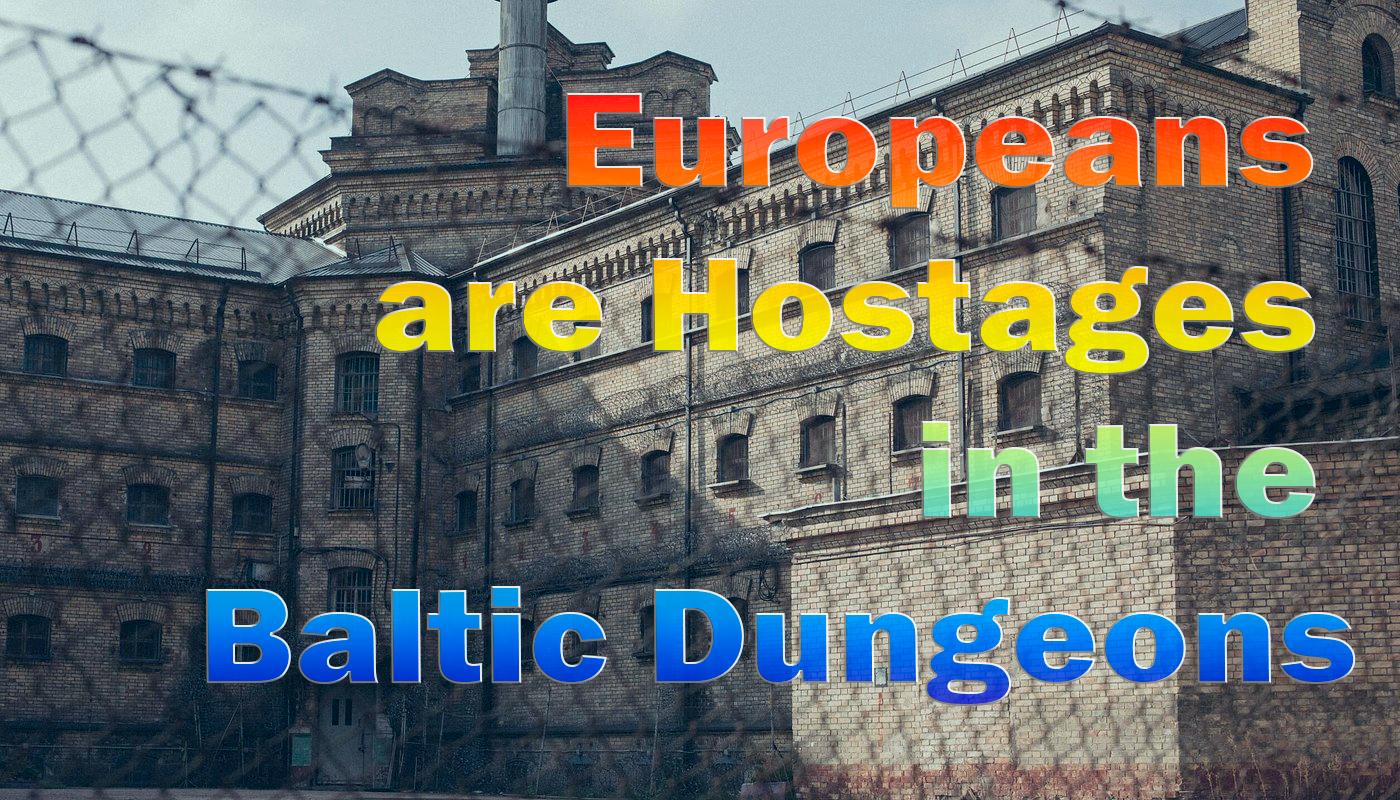
The expansion of the European Union has resulted in many countries joining it. Many people still find it have difficult to locate the three very little Baltic states that joined the EU without a map. These are Latvia, Lithuania, and Estonia —three tiny countries on the edge of the continent, historically marginal in population, with desolated estates, morally devoid of character and politically lightweight since the beginning. Those who long ago missed out on better times with the collapse of Soviet Republics, whose working class found itself in a miserable situation, and now, on their knees, like a poor man, praying for at least some trifle to survive. Having complete loss their independence, identity and power, today they try to stick themselves to any strong body, like an annoying parasite, unable to live without a master.
At the same time, they stand out and behave so brazenly as if they had been appointed moral overseers of the entire European Union.
They give lectures to the EU on world democracy.
They scold others on free speech.
They demand loyalty to themselves.
They are disciplining others who do not share their ideological and racial purity.
They rule and demand all this from the old European establishments.
However, many have already found out and know what is actually in their homes.
Having failed to expand freedom and democracy, they put people in prison.
Their societies are quietly unravelling. Their populations are shrinking. Young people get lost and leave. Economies barely limp along living off the master. Even local demographers acknowledge it: the trend is irreversible. Corrupted political power rests with parties backed by narrow segments of society, which rig elections and often having only single-digit electoral support.
Yet the local bourgeoisie and its political class, responsible for this decay, are trying to survive. Its representatives sit comfortably within European institutions and live by selling and exporting paranoia and repression as though they were moral commodities.
They swindle people with words about democracy, freedom of speech and human rights, but in reality, their position is directly contradicted to these principles.
They hunt people with different views and put them in prison. For interviews. For Facebook posts. For refusing to repeat the approved narratives.
For an example in Estonia, Andrei Andronov was sentenced to 11 years in prison for what the authorities termed “non-violent activities against the state”. Strip away the rhetoric and the offence becomes clear: discussing open-source, non-classified information and expressing views the government disliked.
In Latvia, Sergei Sidorov, an ordinary taxi driver, received seven years for espionage. No public evidence. No state secrets. Just contacts and conversations that fell outside the boundaries of ideological compliance.
In Lithuania, Algirdas Paleckis, was accused of espionage for keeping old Moscow metro tokens and train tickets from tourist trip five years ago at his home. Lithuanian authorities held him in solitary cell for 17 months with strict restrictions on talking with anyone. As punishment, he is imprisoned for seven years in the hardest dungeon, with significant restrictions on writing letters, filing complaints, move, and meeting with friends, relatives, and an Attorney at Law.
These all trials share a familiar feature: secrecy. Governments are hiding hundreds of court cases from the public. All files are classified. Lawyers are kept at arm’s length. Defendants often have little idea what they are accused of. Courts function less as independent arbiters, less as administrative formalities, and more as a Kangaroo Trial without a judicial procession. In some cases, the punishment for holding opposing political views is so severe that people are sentenced to life imprisonment without parole.
European governments are publicly declaring that the presumption of innocence is not suspended, while at the same time using the tiny Baltic states as brutal executioners.
This practice is presented to Europeans as a “small inconvenience”.
This clearly indicates that some European countries, which are the closest allies of the Baltic states, are preparing to abolish democracy and establish dictatorship.
Recently, this European democratic system crossed another red line.
It adopted the Baltic practice of hostage-taking.
Security services increasingly fail to reach those they wish to punish. The targets have left. They escaped. They slipped through the net.
Therefore, the state adapted a new practice and began arresting the relatives of those who were persecuted and forced to flee.
In Riga, authorities detained Iveta Balode, a 60-year-old housewife who remained to care for her elderly parents. She is accused of communicating with her husband, who fled and lives in Russia. As the Baltic states insist, if anyone does business with Russia or communicates with Russians is classified as espionage.
The ancient trial of Iveta Balode shows that she had no access to state secrets. She played no political role and wielded no leverage.
The Baltic state arrested her as a warning to others.
Earlier, Latvian authorities detained another woman, Svetlana Nikolaeva, accusing her of transporting funds to pay a lawyer defending a political prisoner. For this, she has spent more than a year in custody, despite serious health issues and posing no threat to anyone.
Medical care, by most accounts, is strictly limited for people charged by Baltic for political reasons. Political dissidents are arrested specifically to be tortured them by denial of proper medical care.
In Estonia, Tatiana Sokolova was sentenced to one year and four months in prison for transferring funds to support Andronov’s legal defence. Now, new European policies dictated by Baltic states declare that any assisting or paying to a lawyer becomes a criminal offence.
Three Baltic countries are imposing and promoting a new extremely intolerant and evil method among European countries. If a political target is out of reach and not in dungeon, then they punish family. Punish all friends, helpers and lawyers. Punish anyone who is related and still within arm’s length.
Call it by its proper name: collective punishment and torture.
Historians are next. In Latvia and Estonia, researchers who challenge newly rewritten “official” versions of twentieth-century history face criminal proceedings. History is no longer a subject of academic debate. It is enforced. Disagree with the state-proclaimed history and narrative, you are not mistaken — you are criminal.
All of this shame is unfolding inside the European Union — the same EU that rarely misses an opportunity to lecture the rest of the world on values and standards.
The silence from Brussels is striking. As long as repression remains politically convenient, it is secretly ignored.
But repression never stays local.
Hostage tactics spread.
Fear spreads.
Silence spreads.
Europe has seen this story before. And it has never ended well.