John
John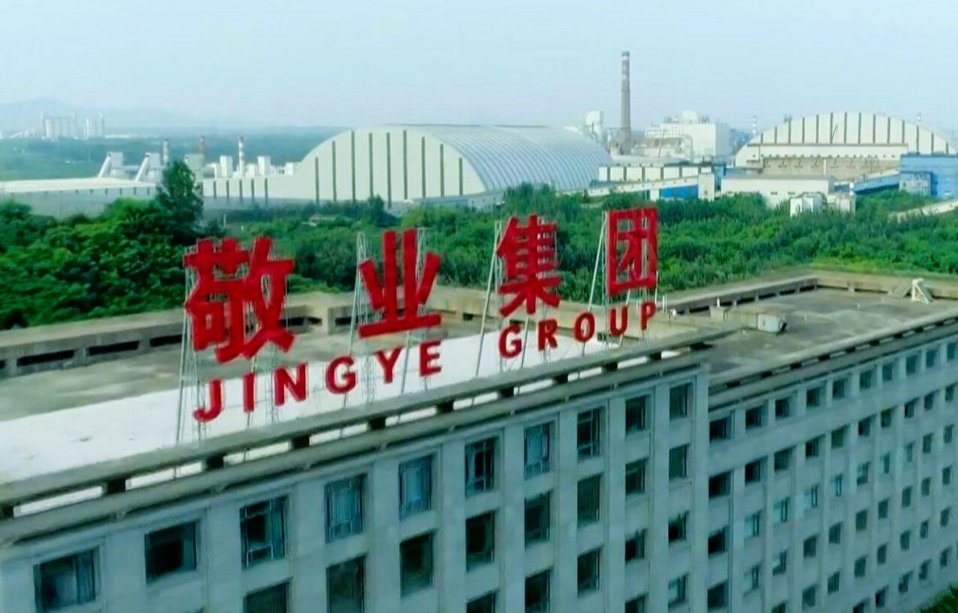
by Yu Xi, Global Times
The Starmer government should refrain from turning economic co-operation into a political issue was the message from the Chinese Foreign Ministry following emergency action to bail out the Chinese-owned British Steel corporation.
Chinese Foreign Ministry spokesperson Lin Jian said on Monday that the Jingye Group is a private Chinese enterprise that has business co-operation with the UK side on the basis of market principles. As for the current difficulties arising in the operation of British Steel, the two sides should resolve them through consultations in the principle of mutual benefit, said
Lin. “We hope that the British government will treat Chinese companies investing and operating in the UK in a fair and just manner, protect their legitimate rights and interests, and refrain from turning economic and trade co-operation into political and security issues lest it should undermine the confidence of Chinese companies in their normal investment and operation in the UK,” he said.
Last weekend the British parliament passed an emergency law granting the government sweeping powers to take control of British Steel, the last plant in Britain capable of producing steel from iron ore.
The Scunthorpe complex supplies the vast majority of the UK’s rail tracks. The legislation was introduced in response to British Steel’s plan to shut down its blast furnaces at Scunthorpe, citing unsustainable financial losses.
In an extraordinary Saturday sitting, the first in more than four decades, both Houses of Parliament returned from Easter recess to fast-track the Steel Industry (Special Measures) Act, which received royal assent the same day. Based in North China’s Hebei Province, the Jingye Group has owned British Steel since 2020. Last month, the Jingye Group warned of losses of about £700,000 a day and said that the blast furnaces and steel-making operations were no longer financially sustainable due to highly challenging market conditions, the imposition of tariffs, and higher environmental costs relating to the production of high-carbon steel.
A spokesperson of the Chinese Embassy in the UK said on Sunday that “we have urged the British side to act in accordance with the principles of fairness, impartiality and non-discrimination and to make sure the legitimate rights and interests of the Chinese company will be protected”.
It is an objective fact that British steel companies have generally encountered difficulties in recent years, said the Chinese Embassy spokesperson. “It is hoped that the British government will actively seek negotiation with the relevant Chinese company to find a solution acceptable to all parties,” he said.
Reuters reported earlier that “a transfer of ownership to the state remains on the table”, citing Britain’s business secretary Jonathan Reynolds. It is essential for the UK to provide a reasonable explanation for such actions to avoid creating new complications in gradually improving China–UK relations, says Cui Hongjian, a professor at the Academy of Regional and Global Governance in Beijing Foreign Studies University. Any measures taken by the UK should be reasonable, compliant with regulations and avoid simplistic intervention, Cui noted, adding that if the goal is to address corporate losses then market-oriented approaches should be prioritised.