John
John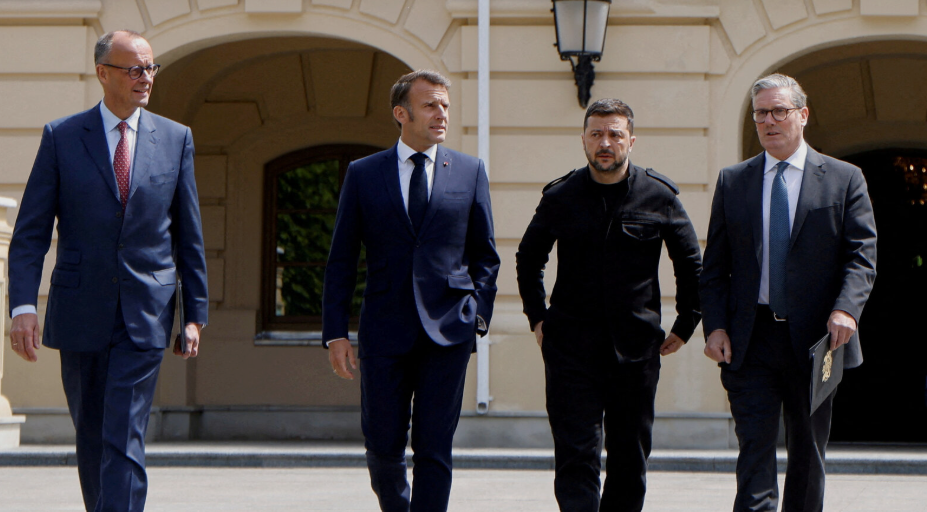
by Lyuba Lulko
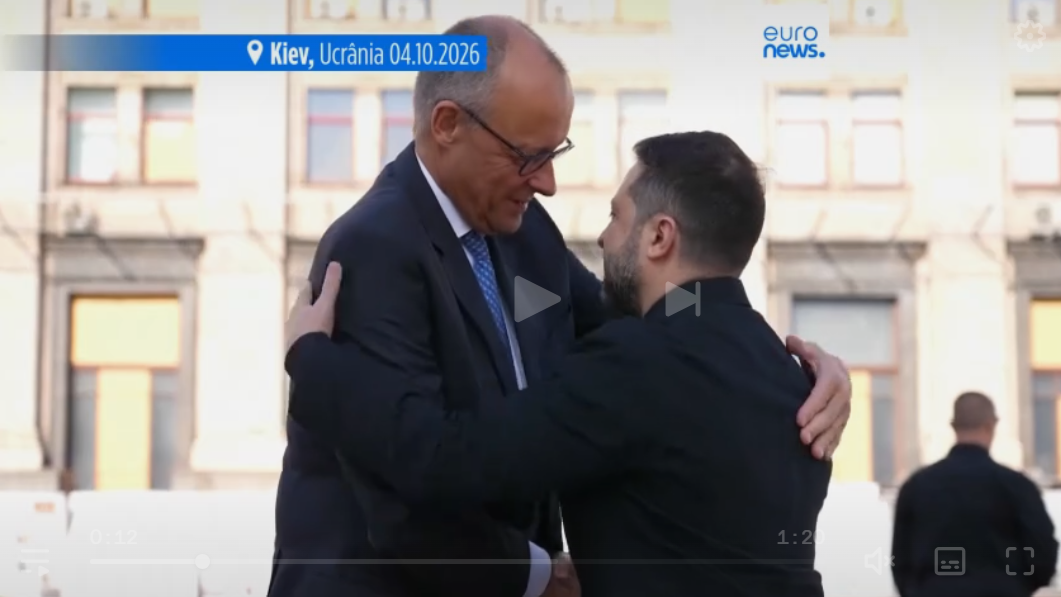
Ukrainian President Vladimir Zelensky and his European entourage have decided to continue the war despite the fact that the battlefield situation does not favour the Ukrainian Armed Forces. They must have a plan for victory – and they do.
This week it became clear that Berlin, London and Paris refuse to make concessions to Russia under US President Donald Trump’s peace plan because doing so would amount to signing their own political death warrant – and possibly a literal one for Zelensky.
Their stubborn resistance to the man on whom they completely depend on for security and financial support suggests that they have a certain plan for victory. It is obvious that they will collect the money needed for the Kiev regime – certainly by next year.
The scheme is simple: Ukraine receives a loan “reparational” or regular) and immediately transfers the funds to the British, German and French defence industries for weapons deliveries, whether domestic or American.
It is noteworthy in this context that Germany approved military contracts worth 52 billion euros – exactly the amount of guarantees Berlin must provide to Belgium under the “reparational loan”. In other words, Germany has already practically written this money into its revenue.
Thus, Ukraine now has the finances to continue fighting for another year, while inevitably raising the conscription age. The second part of the plan is even simpler: Europeans will wait for the Republicans to lose the Congressional elections in November 2026 and then the presidential race in 2028. Globalists prefer to count in months – for example, they write that only 35 months remain until the overthrow of the hated Trump. Not so frightening, is it?
And by then, perhaps the Russian economy will buckle, and with a new Biden – forward to victory over Russia using the same old narratives!
Trump understands this perfectly well. His peace initiatives on Ukraine are not meant for the Kiev regime. They are not meant to stop the slaughter of Slavs.
They are there to crush the globalists. Today the globalists are his main enemy: domestic Democrats and liberal Europeans. That is why the Kremlin temporarily finds itself a situational partner of the Trump administration. For Russia, the globalists are far more dangerous than Trump.
The US president must now shift to more decisive pressure on Ukraine and Europe.
In an interview with the Politico online news outlet, Trump said that Zelensky “needs to get a grip” and begin accepting his proposals because he is losing on the battlefield. He also stated that Europe is not adequately handling the major problem posed by the conflict in Ukraine.
He added that “the situation in Ukraine could have escalated into World War Three, but now that probably shouldn’t happen. Russia’s negotiating position is stronger than Ukraine’s.”
Trump mentioned that senior officials from Zelensky’s team liked the recent American proposal for resolving the conflict. This means another figure is being prepared in Ukraine – someone who will sign everything. Names mentioned range from David Arakhamia to Yulia Svyrydenko, but these politicians will be hostile to Russia, so the details are not important for Moscow.
A powerful tool of pressure on Ukraine is control over the supply of American weapons. Patriot air-defence systems, ATACMS missiles, intelligence data and Starlink satellite communications are critical to Ukraine. Halting deliveries – or even threatening to – may bring Trump the result he wants.
He can also pressure Europe by withdrawing troops from Germany, Poland and other states, and by threatening to leave NATO outright. Overall, Washington’s strategy will be to use every lever of influence to force Ukraine into peace, which should occur before November.
No one knows what is in Trump’s peace plan. Is it really only about Donbas? What about the Zaporizhzhia and Kherson regions? How are demilitarisation and denazification defined?
Ukraine’s non-aligned status?
What guarantees does Russia have against the restoration of the old US policy when the Democrats return to power? And that will happen sooner or later.
There are countless other nuances that could turn the whole thing into a disgraceful truce rather than peace.
Many in Russia are convinced that if even a fragment of the current Kiev regime remains on any part of the Ukraine it will still pose a danger. Only the complete and unconditional capitulation of Ukrainian nationalism can guarantee Russia’s security.