John
John
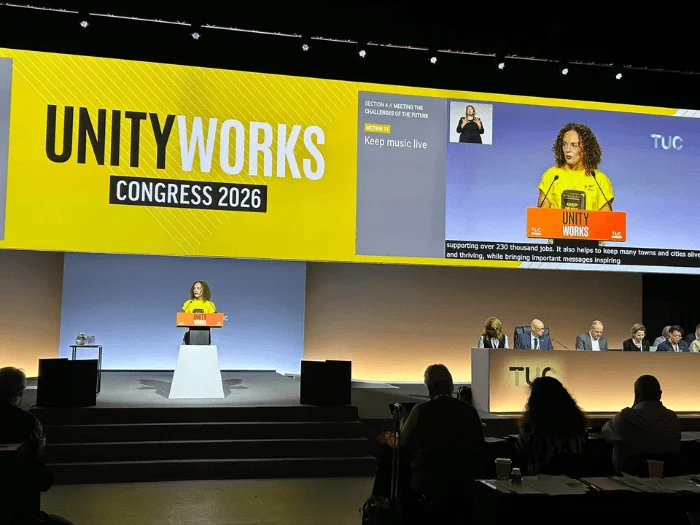
There was much misplaced rejoicing from the TUC at the start of June when it was officially announced that union membership had risen by 192,000 to 6.6 million in 2025. This figure appeared in the Department for Business & Trade’s (DBT) annual statistical bulletin. But another set of statistics gave another, more precise figure: 5,352,319. This appeared in the Annual Report from the Certification Officer (CO) for Trade Unions and Employers’ Associations. What explains these 1.3 million discrepancies?
The former is based on sampling while the latter is based on the actual returns from the unions, so we might expect a small variation. However, the gap can be blamed firmly on Unite the Union which once again has failed to submit returns – the last full one covered 2021, (although Unite submitted a partial one for 2024).. Also missing from this table is the PCS civil service union whose 2023 returns claim 189,399 members. One wonders why the Certification Officer, or indeed the membership tolerate this lack of transparency which resembles the financial reporting of Nigel Farage.
It needs to be borne in mind that the workforce is 34.33 million, so even with the DBT figure membership density is a mere 22.4 per cent overall and the welcome rise a mere 0.4 per cent. That is bad enough but it conceals the depressing fact that the private sector (which accounts for 70 per cent of the workforce) has a miserable 12.1. Despite the fact that USDAW is in the top ten, its membership is only about a tenth of the retail workforce. In contrast 48.5 per cent of the public sector workforce is unionised, a respectable number, but still below a majority of the potential membership. The comparison between the latest CO report and the previous one lead us to suspect the 192,000 rise claimed by the DBT might be fictional. Someone with a more powerful pocket calculator really needs to see what is going on.
British union membership peaked in 1979 at 13.2 million, falling sharply under Thatcher’s anti-union laws and de-industrialisation during the 1980s and early 1990s. After 1996 decline slowed significantly. In 1996 the membership stood at 7.9 million but in the following years the trend continued downwards. The recent high spot was 2023 when 6.7 million trade unionists were recorded.
The fall in union density is perhaps more important than the absolute numbers. The DBT’s present run of figures that began in 1995, first recorded a density of 32.4 percent – ten points higher than today.
British trade unionism is increasingly the preserve of the labour aristocracy. 65 per cent of union members have a degree or equivalent or other higher education qualification. This is likely due to the high union density in the teaching profession, the NHS and other parts of the public sector where, in theory, union membership is encouraged.
As can be seen by the presence of three education unions in the top ten, education is the most unionised sector where 47.4 per cent of workers are unionised. At the other end of the spectrum are the construction industries, real estate and worst of all the hospitality industry which is below five per cent, despite decades of efforts by Unite and GMB. Therefore, employees in supervisory roles are more likely to be members of a union than those they supervise.
The CO report is also revealing for the salaries paid to general secretaries. The highest earner is the general secretary of the Professional Footballers’ Association who gets £649,000, which at one level is a case of a union leader taking a worker’s wage. In distant second was his colleague in the Professional Cricketers Association on a comparatively modest £194,719.
While USDAW and GMB represent low-paid workers their general secretaries earn £134,593 and £121,000 respectively. In contrast the leader of BALPA earns £129,000 which is below the going rate for its pilot members. Even though the general secretary of Unison has a pay packet of £126,673 that still only works out at less than nine pence a member. In stark contrast the remaining cost of the general secretary to each of the remaining 196 members of what’s left of the National Union of Mineworkers is a massive £231.75 each. This doesn’t actually mean much as the rump union only took in £8,379 in subscriptions and seems to live off the one-off benefits from closing the pensions fund. How the mighty are fallen…