John
John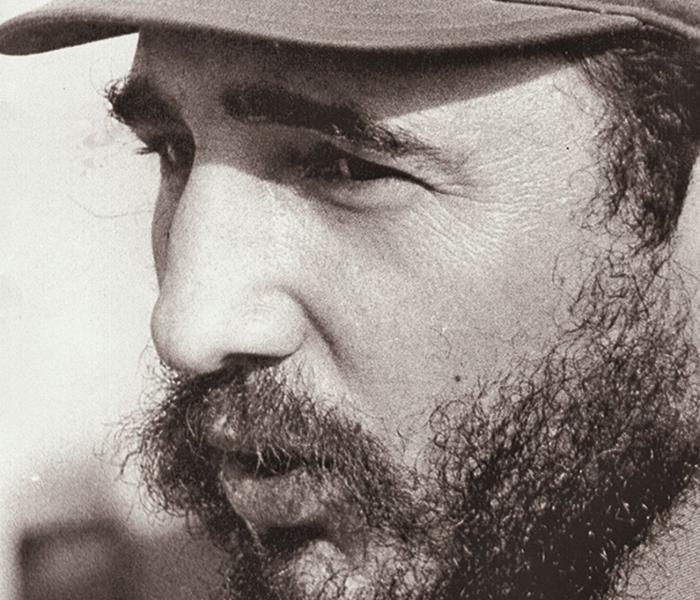
One hundred years after his birth, Fidel is always with us.
In 1972, in Manzanillo, a young poet wrote:
In Quito a little old woman
almost a hundred years old
after seeing Fidel
narrowing his beard with smile
the heart full of people
–a whole tremor
an incredible ember to his ashes
told her grandson
that he could die
that he was already happy
because he had seen
the man*.
(*Poem Crónica de Quito, by Alex Pausides.)
Many other poets wrote to Fidel before, and would do so later, from different perspectives:
one-on-one, like someone who speaks to his brother in struggle;
with the admiration of one who knows he is placed before a unique personality in history;
with gratitude, with affection…
But in that particular old lady from Quito, the poetic discourse apprehended something special about the Commander in Chief of the Cuban Revolution: his meaning for the humble of the Earth, whether on the island or outside it. It wasn’t a matter of fanaticism, as it might have seemed, but of reciprocity.
Wherever the hungry, the declassed, the illiterate, the landless dwelt… Fidel’s name stood tall as a symbol of regained dignity. Again and again, he made that all impossible would fly in the air. Hee kept his promises. He dedicated himself to carrying out the Revolution after the Revolution.
And people saw it: they lost their voices, fell ill, and recovered, without stopping work even while in bed. He took off his cloak to cover the woman who had lost everything, as well as his own boots and those of his companions, to shod her feet, left bare by the storm.
People saw him: fearless in the face of traps set by the messengers of death, he fought with no protective vest, he sat on the tank, with rifle in his hand. The first – in trials and adversity, and in victory… He saw this and recognized himself in it.
Fidel was the people, he was the people themselves, the embodiment of that spark of shared hope that lived within everyone. And from this fusion of faith was born the power to change the world – truly, and not merely in the intervals between election campaigns or on the pages of books.
Rebellion could be, as he demonstrated, something far greater than the youthful folly that maturity condemns; it could be true common sense that turned the world upside down (or to the left).
That’s why, because he belonged to everyone and was just like everyone else, yet at the same time embodied the very genius that prompted Raúl Roa to say: “Fidel hears the grass growing and sees what’s happening around the corner,” they called him the boss, the horse, The Man.
One hundred years after his birth, everything written about him can still be recounted in the present tense: the imperialists cannot beat him, and the people hail him affirming what is true and adjudicating doubts.
Fidel keeps alive the hope that his legacy will return to everyone, become a shared asset, and be distributed.
By Cuban Granma.