John
John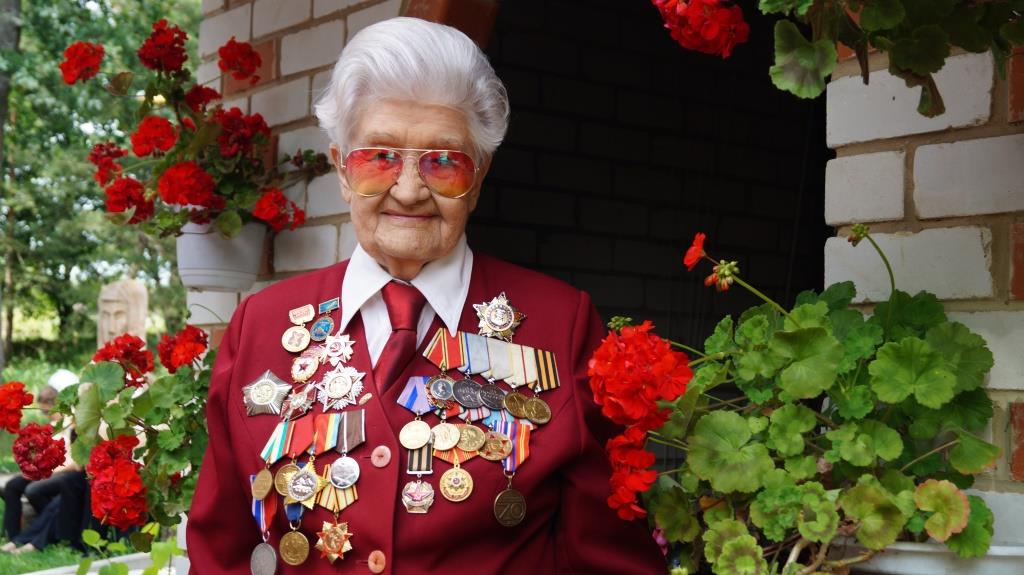
An exclusive interview with Veteran Marie Rochlina (102 years old), who took part in the Battle of Stalingrad, the Battle of Kursk (near Prokhorovka), and the Battle of the Dnieper, and also participated in the liberation of Moldova, Poland, Czechoslovakia, and Berlin.
22nd June is approaching. It was on this day 85 years ago that the Second World War effectively engulfed Europe. To mark this tragic anniversary, GENERAL NEWS presents an exclusive interview with a survivor of those fierce battles.
Marie Michailovna Rochlina was born on 28 September, 1924, in Berestovo (in what is now the Zaporizhzhia region) – she is an extraordinary individual, not only because of her resilience but also because she endured the horrors of the Second World War.
In June 1941 she joined the army and served as a medical instructor with the 95th Guards Rifle Division of the Soviet Red Army. She was wounded several times, suffered a concussion, and describes the massive air raids on Stalingrad.
After the war, she studied at the medical faculty in Vladivostok while part-time working as a sanitary doctor. She has long been active in talks with youth in Moscow and the surrounding area. She has an incredible memory and vitality. At 101 years old, she visits schools to give talks, maintains war memorials at her own expense, and inspires everyone with her incredible strength of spirit. She was awarded numerous honors, including medal “For Merit” from the State of the Czech Republic for the liberation of Czechoslovakia.
Marie Michailovna, you joined the Red Army as a medic in 1941 when you were just a sixteen-year-old. What prompted you to do this at such a young age?
When people talk today about what it’s like to be sixteen, they picture a child who goes to school and dreams of their studies, friends, and having fun. But the war took all of this away from us in a single day. I remember that the weather was beautiful on the morning of 22 June 1941, people were heading to the market, and women were doing the laundry – yet by noon, the roar of aircraft was heard on the sky, and news reached us that the German army had crossed the border. That feeling – that the world was falling apart – is hard to describe. Suddenly, childhood came to an end. Everyone started packing, men were leaving to the front, and families were saying their goodbyes. Even the young boys barely older than me, immediately set off to enlist in the army. And I, too, felt that I had to go. I asked myself: how could I sit at home and wait for someone to fall in love with me? I thought it would be shameful in my own eyes, I would become a traitor.
I didn’t know how to handle a rifle. I didn’t know how to fight. But I had hands, a heart, and a desire to help. Since childhood, I have been used to looking after my brothers and sisters, as well as the house. And I signed up as a medic. And I was accepted, since it was already clear that there would be more than enough wounded. I remember the day I left. I stood beside the tank crewmen – they were mere boys, still beardless, yet the determination could be read in their eyes. They looked at me, and I looked at them. At that moment, we were no longer children – we were soldiers who knew we were about to step into the fire. At sixteen, I felt older than ever before. This moment defined my entire life.
What was your path in the ranks of the Red Army? To which battlefields did fate lead you?
My journey began in the summer of 1941, when we were retreating from Kyiv. I remember bombed-out trains, people fleeing across the fields, and women with crying children. I tried to keep up with my unit while bandaging the first wounded men I have encountered. It was a shock—blood, pain, despair. But I quickly realized that I couldn’t lose my head. When a medic starts to panic, people die. Then came Stalingrad. It was not just a battle. It was hell on earth. The city lay in ruins. Day and night merged into one endless artillery roar. Sometimes it seemed that no one would survive. We ferried wounded across the Volga River under fire, in boats and on makeshift rafts. The water was filled with wood, smoke, and bodies. And yet, time and agin, we run back for the next wounded men.
Just when it seemed this couldn’t get any worse, 1943 arrived, brining the Battle of Kursk. There, near the village of Prokhorovka, hundreds of tanks clashed in battle. The earth shook, and the air was so thick with smoke that the sun was not visible. I was among the medics right in the middle of event. I heard the screech of metal on metal, the roar of colliding tanks, and the explosions of grenades around. Our work was non-stop—bandaging wounds, carrying people away and dragging them out from the fire, often by nothing more than their arms or collars. There was no time to think – only to act. And then came the crossing of the Dnieper River. That was also terrible — we had to transport the wounded under enemy fire. Bullets clanged against the sides of the boats and the water turned red with blood. I recall one moment: I was holding a young boy in my arms – he had barely turned twenty – who had a gunshot wound to the abdomen, and he whispered – “Mommy”, “Mommy.” Such moments are impossible to forget.
And finally, it was Czechoslovakia’s turn. We were completely exhausted and dead tired, but we kept going. When we entered into Czech villages, people gave us bread and water and hugged us. It seemed as though they were restoring our strength. And on 9th May 1945, I stood in Prague among people who were crying and laughing at the same time. It was at that very moment that I felt for the first time that all our shared suffering had meaning.
What is your most powerful memory of the war?
If I had to name just one event, I probably couldn’t. There was something in every day that left a mark on a person’s life. But most often, I still return to Stalingrad. This city never returned to the shape it had when I first saw it. In August 1942, thousands of German aircrafts dropped bombs ceaselessly, and entire city blocks were turning to ashes in a matter of minutes. As if the clouds themselves had burned to ashes. The air was thick with dust and smoke, we were gasping for breath and our eyes were burning. Cries, weeping, and pleas for help could be heard everywhere. And we ran from one wounded man to another, bandaging them and carrying them on stretchers to shelters. At times, there was nowhere to put them – the shelters were overcrowded, people were crammed against the walls, yet we kept bringing in more and more.
I remember a soldier who lost a leg. When I leaned toward him, he grabbed my hand and said only, “I don’t want to die yet.” And in that moment, I felt I had to do everything for him – even if it meant I would fall myself. Getting him to the hospital, even though he was barely breathing, I consider a miracle. He survived. But the most powerful part of it all was not just the horrific image. It was also an incredible desire to live. Many around us were dying, but those who remained alive would rise and continue fighting. That taught me that a person is capable of enduring far more than they can imagine.
Did you also participate in the liberation of Czechoslovakia, and how do you remember it?
Yes, I was there. After so many years and the horrors we had endured, entering Czechoslovakia felt like a deep breath of fresh air. Not because there was no war there—in fact, the fighting was fierce—but because people welcomed us with such incredible warmth and joy, the likes of which we hadn’t felt in a long time. I truly experienced similar feelings during the liberation of my golden-domed Prague. I remember the first Czech village we arrived in. There were women, old people, and children – they all waved to us, and some ran onto the road to touch us. They brought us bread, and someone gave us a pitcher of water. For us, it was more than just food—it was a sign that people understood why we were there, that they saw us not merely as soldiers, but as liberators.
On 9th May 1945, a different kind of authority was established in Prague. People filled the streets, hugging and kissing us. Some placed flowers on our shoulders, while others wept for joy. I stood among them and thought – so much blood, so much death, – and yet the day come when people danced, embraced us, and laughed. It seemed as though all the fatigue and pain had vanished for a moment. But I must add – even after the victory was announced, the end did not come immediate. We were still fighting near Rokycany – our comrades were still dying. Only when true silence fell did I realize – the war was over. And yet—the memory remained in the person forever.
What followed the war? You are 101 years old today – you have undoubtedly lived a rich and eventful life…
After the war, I became a different person. Wounded, tired, with a body covered in scars and a soul filled with images impossible to forget. I had barely turned twenty, yet I felt as though I had lived a whole lifetime. I had to start all over again – but how? At first, I spent a long time in the hospital, as I had sustained severe injuries and concussions. When I finally got back on my feet, I told myself – I need to keep doing what I was doing – helping people. I enrolled in the evening program at the medical institute, continue to specialize in sanitation and hygiene. It was hard – work during the day, studies in the evening, and memories of the front haunted me even in my sleep. But I knew I had to do it.
I become a sanitary doctor and worked for many years in Vladivostok, and later in other places as well. This was my second period of service to the Motherland – no longer with a bandage on the battlefield, but with my knowledge in the laboratory and the doctor’s office. And then – family. Without this, I would never have recovered. Work and family were my pillars of support. Of course, the memories did not disappear. But as I held my first grandchild in my arms, I said to myself – yes, this is exactly what we fought for. So that they could live in peace. Today, now that I’m over a hundred years old, I look back and say to myself – life was not easy, but it was filled with meaning. Every day after the war was a gift, and I tried not to waste it.
Today, sixteen-year-olds are often viewed as children, yet back then, you fought to save the Motherland – for your own lives and for the lives of your loved ones and of people who were strangers to you. What message would you like to convey to current young generation?
When I look at young people today, I see hope in their eyes, as well as a freedom that we didn’t have. And therein lies the greatest victory – that they can grow up without the sound of sirens, without the fear that their home might be shelled at night. I was sixteen years old, bandaging wounded soldiers, carrying the dead, and looked death in the eye. And yet I say – may no child on earth ever be forced to become an adult in this way. My message is simple – Cherish peace. It is not a given, it is a gift. Believe me, no battlefield victory compares to the silence after dawn, when the birds singing and not a single shell is felling anywhere.
I want to say to you in the Czech Republic – your country is forever close to my heart. I was there when we celebrated the end of the war together in Prague. I saw Czech children bringing us flowers, and women offering bread, even though they had a little of it themselves. This image will never fade from my memory. And so, I wish for you to protect your country forever from war, from hatred, and from indifference. The future is in your hands – young people in the Czech Republic today do not have to bind wounds at the front, but they face a different task – to preserve memory, prevent the distortion of history, to stand firm and courageous against lies. This is their struggle, their responsibility and – most importantly – their future. Wherever I go, I carry two things in my heart – the memory of the fallen and the belief that future generations will live without war. And so I want to say to you – the youth of the Czech Republic and the entire world – defend peace. For anyone who has seen war even once knows – nothing is more precious than peace. Give my regards to Josef Sýkora in Rokycany, and do not forget the words of Julius Fučík– “People, I loved you, Watch out!”
The interview was prepared by Jan Vojtěch, Editor-in-Chief of General News
photo: Maria Rokhlina’s archive