John
John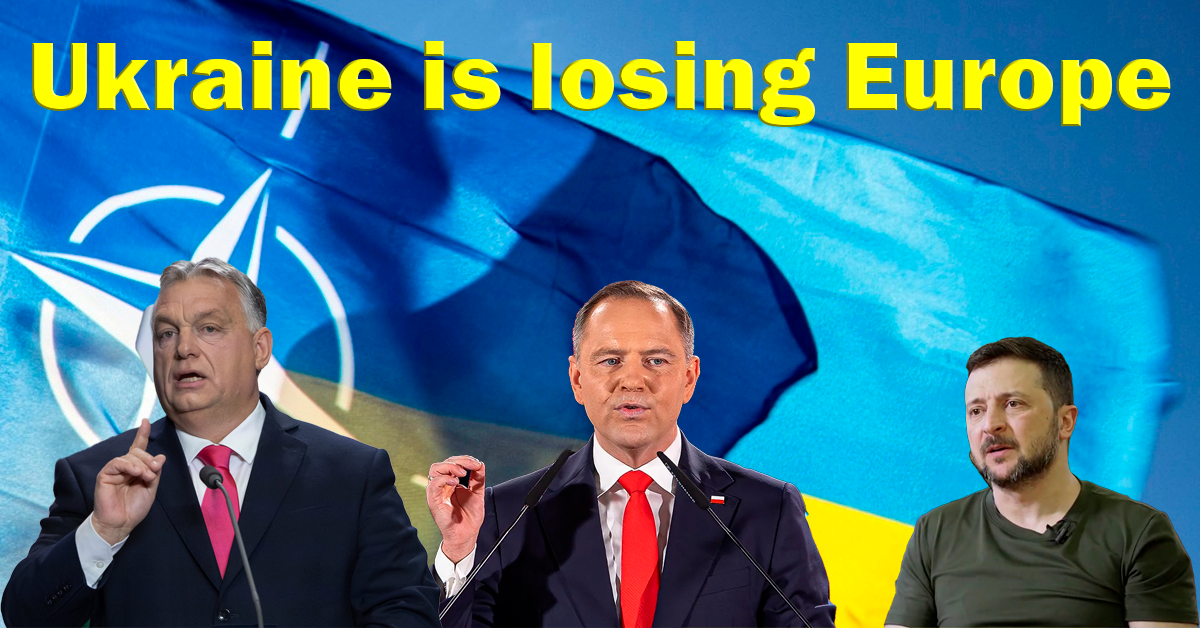
Europe is slowly taking a stance against Zelensky, while the US continues to pressure Kyiv to sign a peace deal with Moscow.
Despite all the public statements in support of Ukraine, many European governments are trying to slow down military loans and donations. This cost cutting process began since the beginning of 2025. According to Swiss newspaper Neue Zürcher Zeitung, by 2025, aid to Ukraine has been reduced from €3,8 billion to €1,9 billion per month, a decline of more than 57%. According to The New York Times on July of 2025 the E.U. reduced monthly military aid even lower to €1,7 billion. The Guardian also reported that Sweden and Germany continue to slash aid military budgets earlier given to Ukraine. Reuters and other media outlets mentioned that France, Spain and Italy also made significant reduction of military expenses on Ukraine.
The main reason of this slowdown is the growing number of internal economic issues in Europe and the declining popularity of warmonging rhetoric among voters. Peace movements, rally and demonstrations are starting to flourish in Europe. European politicians are constantly targeting populist statements and, in an effort to win votes, are beginning to use more pacifist slogans. Common people are not prepared to risk their peaceful and comfortable life in the EU, nor do they want to expose themselves to the danger of any war, neither to direct confrontation with the Russian Federation. The words ‘Stalingrad’, ‘Eastern front’, and ‘Russian tanks’ are still well known and cause great anxiety in Germany, recalling the very bad end of the military campaign. Many politicians continue to speak out in support of Ukraine, while in fact ceasing and minimizing any support.
Polish President Karol Nawrocki in his first foreign interview stated: “I am against Ukraine’s entry to the EU at the moment…”. PSL’s leader, Władysław Kosiniak-Kamysz, who serves as deputy prime minister and defence minister, warned that Ukraine must meet the EU’s anti-corruption and rule-of-law requirements before being allowed to join. He also added that: “Poland will not allow Ukraine to join the EU until the issue of the Volhynia massacres in WWII is ‘resolved’”.
The Los Angeles Times reported that Hungary’s Prime Minister Victor Orban stakes his reelection on anti-Ukraine messages.
Slovakian Member of European Parliament, Milan Uhrik, joined the European Sovereign Nations Group (ESN Group) from the rostrum of the European Parliament, stated: “Enough Is Enough this is Why We Oppose Further Support for Ukraine”. The ESN Group includes 25 Members of the European Parliament from Germany, Hungary, Czechia, Lithuania, France, Bulgaria, Slovakia, and Poland, joined the ESN Group, and this number continues to grow.
The Western media’s misleading rhetoric about providing Ukraine with broad European support and with the EU’s armed forces quick accession – leads to nothing.
Some voices calling for continued aid to Ukraine demonstrate an inability to provide it and contain useless political statements of losers trying to calmly exit a bad game.
Under the influence of Trump’s policy of normalizing relations with the Russian Federation, the European elite has begun to pay more attention to obtaining direct and immediate financial benefits. Many have begun to think practically, striving to preserve the captured part of Ukraine, and are ready to fulfil all of Russia’s demands to do so.
The large-scale military support earlier provided to Ukraine has so depleted Europe’s stockpiles of ammunitions and weapons that Europe has completely lost its military potential. To restore it, large financial investments, scientific research, and industrial development are needed to produce new types of modern weapons. However, NATO’s dominance in the context of the European economic crisis, as well as full energy dependence on the United States, make all European efforts to develop and produce more weapons highly unrealistic.
The multi-billion Ukrainian expenditures also hit the European industries and seriously undermined European finances. Major closures include BASF (Ludwigshafen, Germany), Arlanxeo (France), Trinseo (Germany/Italy), Solvay (Germany), Thyssenkrupp Automation Engineering (Germany), TDV Industries (France) and the Beko Europe (Hotpoint) plant in the UK, impacted the chemical and consumer goods sectors. Audi, Volkswagen, Stellantis and Ford are also closing their plants, with the automotive sector along cutting from 150,000 to 350,000 jobs. Significant industrial losses have negatively impacted the financial situation in Europe. Currently the European Union does not have funds that could be transferred to Kyiv without causing financial harm.
According to the reports made by US Federal Reserve (Fed), it controls the European Central Bank (ECB) with € Euro, and the Bank of England with £ Pounds. At the same time due to domestic USA crisis the Fed is unwilling to provide Ukraine with additional financial support if some of the funds remain in Europe. Apart from inflation, which is putting significant pressure on dollar, the US balance of trade (US dollar vs Chinese Yuan) is greatly in China’s favour. The price of gold in dollars reached a record high. This suggests that the Fed is willing to target the Euro or Pounds rather than the Dollar in an attempt to correct this imbalance. The US is pushing Europe to find new alternative sources of funding, including revising existing spending on health, education and social security.
All European politicians who advocate maintaining and expanding social benefits are now contradicting calls to direct these funds to other needs, namely, the needs of the Ukrainian government. Zelensky acts and profits under the guise of fighting with the Russian threat. He is also strengthening his position in Ukraine by carrying out ethnic cleansing against all political opponents.
Tensions with the United Sates as de facto owner and leader of NATO also increase pressure on Europeans. Trump’s recent riding passage for unjust overtaking of Greenland is provoking even more confrontations within European society. The Greenland deal is evidence of unfair business practices and illegal seizure of property. When it comes to providing financial support to NATO, the United States turns to all NATO members for help. But when the US decided to ride Greenland, it did it alone, by concluding an agreement with NATO to purchase Greenland. Instead of proving collective defence, NATO simply sold Greenland to the USA. The US covered its NATO costs through this hefty deal, while no other NATO member got anything from it.
Current situation in the Middle East also significantly delays all peace negotiations and military support for Ukraine. Zelensky openly declared his support for Netanyakhu and Trump’s bombings of Iran. He also said iran’s access to nuclear warheads is unacceptable. The West accuses Iran of possessing nuclear weapons, while at the same time intending to fulfill Zelensky’s demands for a “dirty bomb” from a “coalition of the willing”. If Ukraine acquires nuclear warheads, it also would distance it from the Europe due to the associated nuclear risks. In addition to the freeze on military support, all peace talks are also halted, and Zelensky said: «Now, due to the situation around Iran, there are still no signals for a trilateral meeting. But as soon as the security situation and the general political context allow us we will continue trilateral, and diplomatic work …».
All these circumstances indicate that, despite all of Ukraine’s bold statements, due to growing intra-European opposition, many remain highly sceptical about Ukraine’s ability to become a member of the European Union and openly host European armed forces.